
Symposium
Hosting Futures
Cultural Institutions Shaping the Future
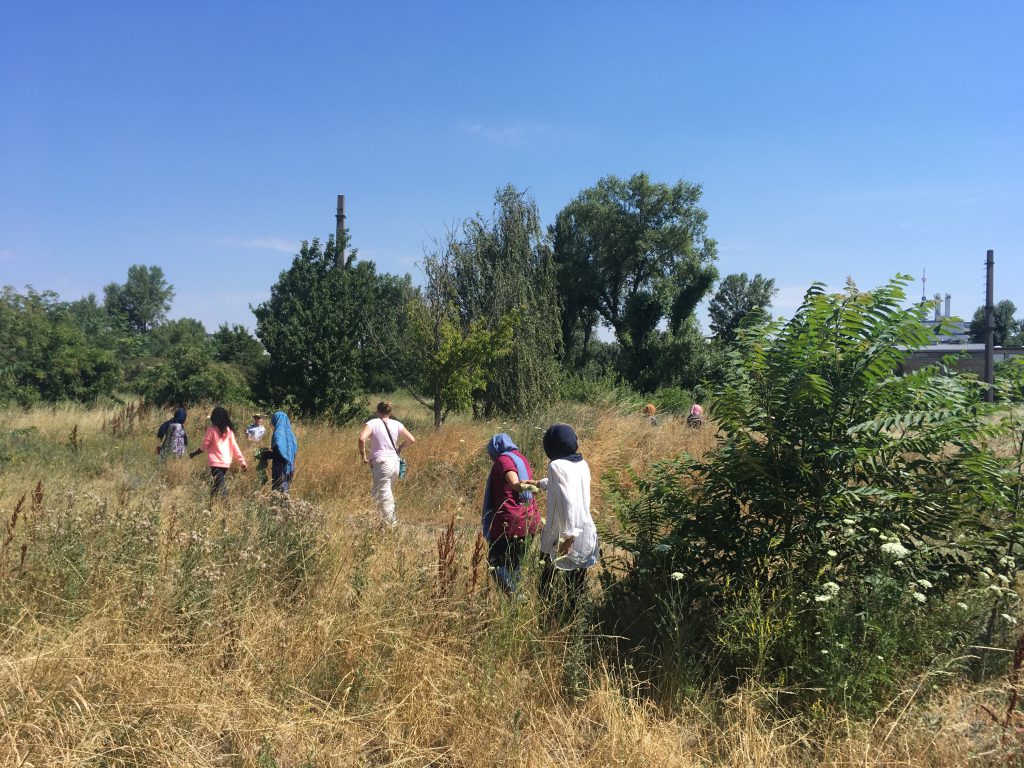
The Az W Care & Repair public workspace on the Vienna Nordbahnhof grounds, 2017
© Photo: Cristian Stefanescu
To mark 25 years of the MuseumsQuartier, the institutions on the grounds are hosting a symposium together. What can cultural institutions contribute on such topics as democracy, climate and health? Viewpoints from the realms of art, dance, architecture, education and mediation bring a multitude of perspectives together.
What role do art and culture play in an increasingly fragmented society, and how can cultural institutions strengthen participation, helping to shape outcomes, and democratic engagement?
Participants from MQ institutions and experts from a range of countries devote themselves, in four panels, to the role of cultural institutions in times of profound social transformation, and open up perspectives for the museum and cultural landscape of tomorrow. One of these panels, curated by the Az W and ZOOM, on Well-being, Care and Resilience, sheds light on museums as places of collective resilience and care from the perspective of the realm of architecture and museum work.
An event organised by:
Architekturzentrum Wien, Kunsthalle Wien, MuseumsQuartier Wien, museum moderner kunst stiftung ludwig wien, Tanzquartier Wien, ZOOM Kindermuseum
In cooperation with ICOM Österreich
PROGRAM
13:00–13:30 Welcome remarks
13:30–14:30 Panel 1 and Q & A
Cultural Institutions as Sites of Participatory Democracy
Panel hosted by MuseumsQuartier Wien
Today more than ever, cultural institutions face the challenge of not only preserving and communicating culture but also positioning themselves as active social actors. While museums are emphasizing their role as places of cultural exchange, education, and reflection, they are increasingly affected by government intervention—whether through attempts to exert political influence over content, the restructuring of management, or budget cuts. In increasingly repressive and polarized times, what responsibilities and exemplary role do cultural spaces—as “third places”—play in fostering civic participation? How do we remain places where democracy is lived out and continually renegotiated? Against the backdrop of the climate crisis and growing societal polarization, the contribution and role of cultural institutions in fostering sustainable social transformation become even more important.
Stefan Charles, Head of the Department of Culture, City of Cologne
Kathrin Dellantonio, Executive Director, Museumsquartier Bern
Nikolaus Hirsch, Artistic Director, KANAL Architecture Brussels
Bettina Leidl, Director, MuseumsQuartier Vienna
Moderation: Doris Rothauer, Cultural manager and author
14:30–15:30 Panel 2 and Q & A
In English
A Space for Almost Everyone
Panel hosted by mumok
Assemblies, participation, play, care, hospitality, unlearning, committees, collective experimentation: how do art institutions become spaces of the civic? Drawing on twenty years of projects across curating and instituting, and his role as Curator-at-large and Head of Commoning at Kanal-Centre Pompidou (Brussels), Grégory Castéra reflects on current curatorial and institutional efforts to extend the notion of education and engagement, redefining who counts as a public and how. In conversation with Fatima Hellberg, General Director of Mumok, followed by a Q&A.
Grégory Castéra, Curator-at-large and Head of Commoning, KANAL Centre Pompidou Brussels
Fatima Hellberg, General Director, mumok museum moderner kunst stiftung ludwig wien
15:30–16:00 Break
16:00–17:00 Panel 3 and Q & A
Spaces of Care
Museum Practice Between Well-being and Social Responsibility
Panel hosted by AzW and ZOOM
Visitors no longer perceive museums exclusively as places of presentation, preservation, and education, but also as spaces for social and individual well-being. Future concepts must therefore address how museums can actively contribute to mental health, social resilience, and the sustainable shaping of the future, as well as how to foster dialogue and build community. Particular attention should be paid to children and adolescents, for whom museums serve as transformative spaces that create emotional accessibility through participatory formats, inclusive educational programs, and visitor-centered design. As active co-creators, they experience self-efficacy and a sense of social belonging. A panel of experts from the fields of academia, medical humanities, and child and adolescent psychiatry will discuss current research findings and visionary concepts for the museums of the future—with a focus on sustainable, audience-oriented museum work in which well-being and resilience are integral components of institutional practice.
Angelika Fitz, Director, Architekturzentrum Wien
Paulus Hochgatterer, former Head of Child and Adolescent Psychiatry at Tulln University Hospital
Rebekka Rinner, Curator, Hygiene Museum Dresden
Moderation:
Lene Benz, Curator Public Program, Architekturzentrum Wien
Andrea Zsutty, Director, ZOOM Kindermuseum
17:00–17:15 Break
17:15–18:15 Panel 4 and Q & A
In English
Terms of Engagement: Live programming and new forms of institutional encounter
Panel hosted by Tanzquartier Wien and Kunsthalle Wien
Participation has become a central value in contemporary cultural institutions. Through live programming, performance, discourse, and participatory formats, museums and arts organizations increasingly seek to create spaces of engagement, encounter, and collective experience. But how are participation and engagement actually structured? What assumptions about bodies, behavior, attention, accessibility, and sociability are embedded within institutional formats?
Bringing together curators working at the intersection of exhibition-making and live programming, this conversation explores how institutions consciously or unconsciously shape the experience of their publics, and how museums and performing arts institutions might learn from one another in developing more conscious, plural, and embodied forms of engagement in times of increasing social fragmentation and precarity.
Andrea Lissoni, Artistic Director, Haus der Kunst München
Nora-Swantje Almes, Curator of live program and outreach, Gropius Bau Berlin and Curator Austrian Pavilion Biennale d’Arte Venezia 2026
Elvira Dyangani Ose, Artistic Director, Zeitz MOCAA (Museum of Contemporary Art Africa) Cape Town
Moderation:
Isabel Lewis, Co-Director, Tanzquartier Wien
Closing remarks and reception