Temporary. Structures of Necessity
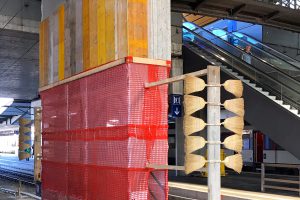
The exhibition highlights structures that form an essential yet often overlooked part of our urban infrastructure. This temporary layer keeps…
Location: Architekturzentrum Wien - Exhibition hall 2

Excursion
From the Kunsthalle to the Fluc
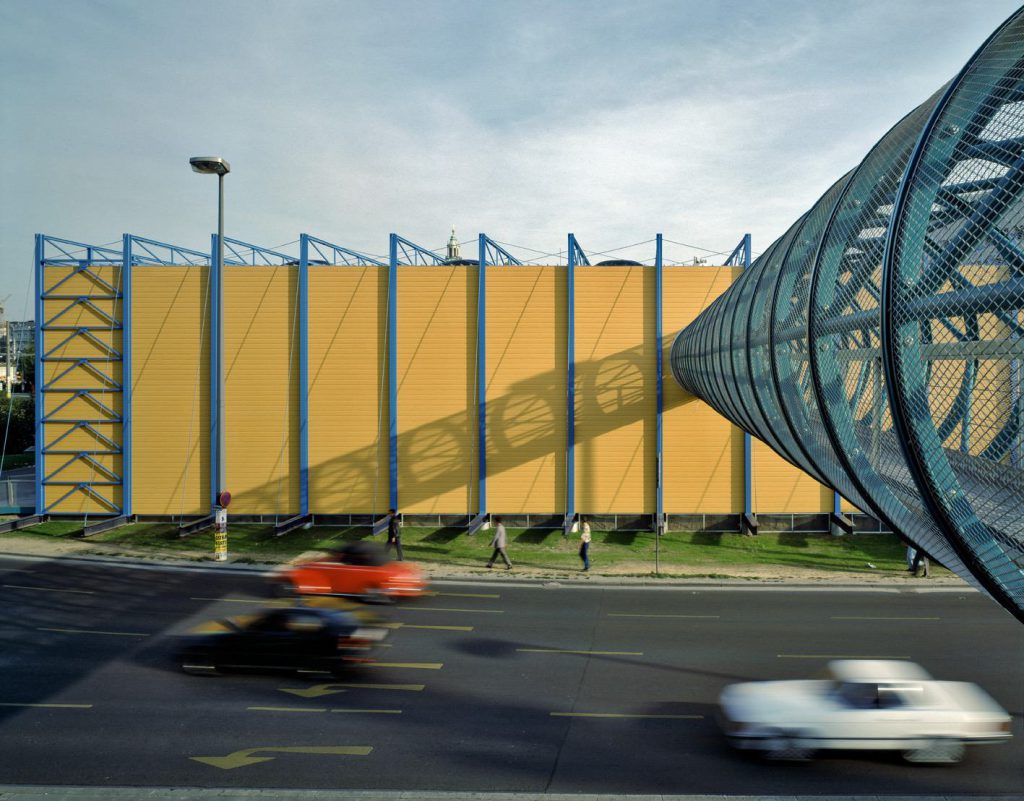
Adolf Krischanitz, Oskar Putz: Kunsthalle Karlsplatz 1991–1992
© Architekturzentrum Wien, Collection, Photo:
Margherita Spiluttini, 1992
A number of cultural institutions in Vienna started out as provisional structures born out of a specific need, and some of these temporary solutions proved so practical in terms of construction, design and function that they have become permanent.
The first Kunsthalle Wien was a yellow container designed by Adolf Krischanitz on Karlsplatz as a temporary pavilion for exhibiting contemporary art. It went on to become a definitive cultural venue, and the glass pavilion of the Project Space now stands on the same site. The Fluc (now FLUCC) was created as a cultural venue on unused urban space following the construction of the new railway station at Praterstern: a disused pedestrian underpass was repurposed and supplemented above the entrances by a living architectural model, a modular structure comprised of portacabins. The Notkirche (makeshift church) on Gaussplatz was built as a functional temporary solution for the parish. Today, it also serves as a venue for concerts and local festivities. What all three buildings have in common is that they have brought lasting change to the local cultural scene and the urban context.
With:
Ulrich Huhs, architect
Amar Priganica, cultural researcher
Klaus Stattmann, architect
Martin Wagner, FLUCC
Moderated by: Suzanne Kříženecký, Az W