
Lecture & Discussion
The Circular Potential of the Obsolete City
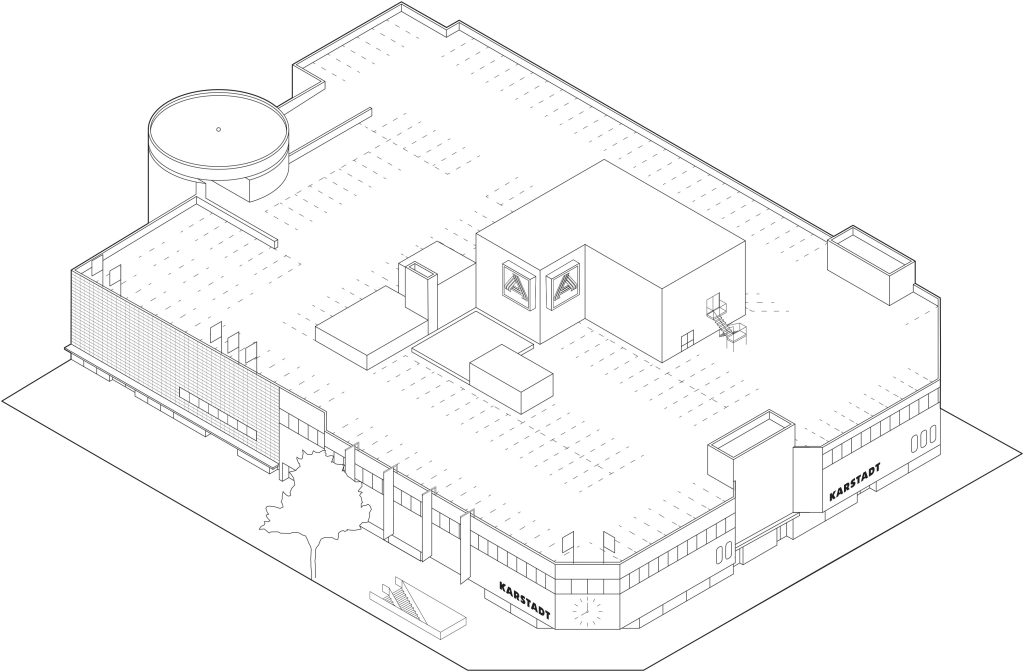
Karstadt Osterstrasse Hamburg, graphic: Alina Bruder, Selina Casten, University of Kassel Institute for Urban Development
The climate crisis, resource scarcity and social inequalities are intensifying the pressure on urban development and architecture. How can a city continue to develop without consuming new land and resources or generating CO2? What are the paths towards achieving a shift in the building sector?
What happens to cities when existing structures lose their function and space suddenly becomes available? Stefan Rettich discusses the potential of the obsolete city and highlights the opportunities offered by structural additions, refurbishment and adaptation. The Habitat 2030 initiative presents the life-cycle assessment tool, which can be used to calculate the CO2 emissions generated during construction. In the panel discussion, representatives from central government and local authorities, as well as professionals in the sector and researchers, discuss resource-efficient construction and the opportunity presented by existing building stock.
Speaker: Stefan Rettich, architect, visiting professor at TU Wien
Impuls Habitat 2030: Katharina Kothmiller, co-form; Lina Streeruwitz, StudioVlay Streeruwitz
Discussion also with: Nicole Kirchberger, Klima- und Energiefonds; Amila Širbegović, City of Vienna — MA 50
Moderated by Lene Benz, Az W and Andreas Bernögger, future.lab
A cooperation by Az W and the TU Wien future.lab, with the support of the Klima- und Energiefonds